How much do quartz worktops in Sanderstead cost?
The cost of a quartz worktop depends on your chosen brand and collection, whether you prefer a 20mm or 30mm surface, the number of slabs required, island size, sink and hob cut-outs, drainer grooves, upstands, splashbacks, edge profiles and site access. If you send us your kitchen plan, photographs, approximate dimensions and your CR2 postcode, we'll provide a tailored quotation for your project.
Do you supply, fabricate and install quartz worktops in Sanderstead?
Yes. We provide a complete service, from helping you choose the right quartz and arranging samples through to home measuring, professional templating, precision off-site fabrication and installation. We also complete sink and hob cut-outs, tap holes, drainer grooves, upstands and matching splashbacks as part of the finished installation.
Which parts of Sanderstead do you cover?
We regularly work throughout Sanderstead Village, Limpsfield Road, Addington Road, West Hill, East Hill, Rectory Park, Upper Selsdon Road, Mitchley Avenue, Hamsey Green and the wider CR2 area. Every quotation is prepared specifically for the property where the worktop will be installed.
Can you fit quartz worktops for islands, splashbacks and utility rooms?
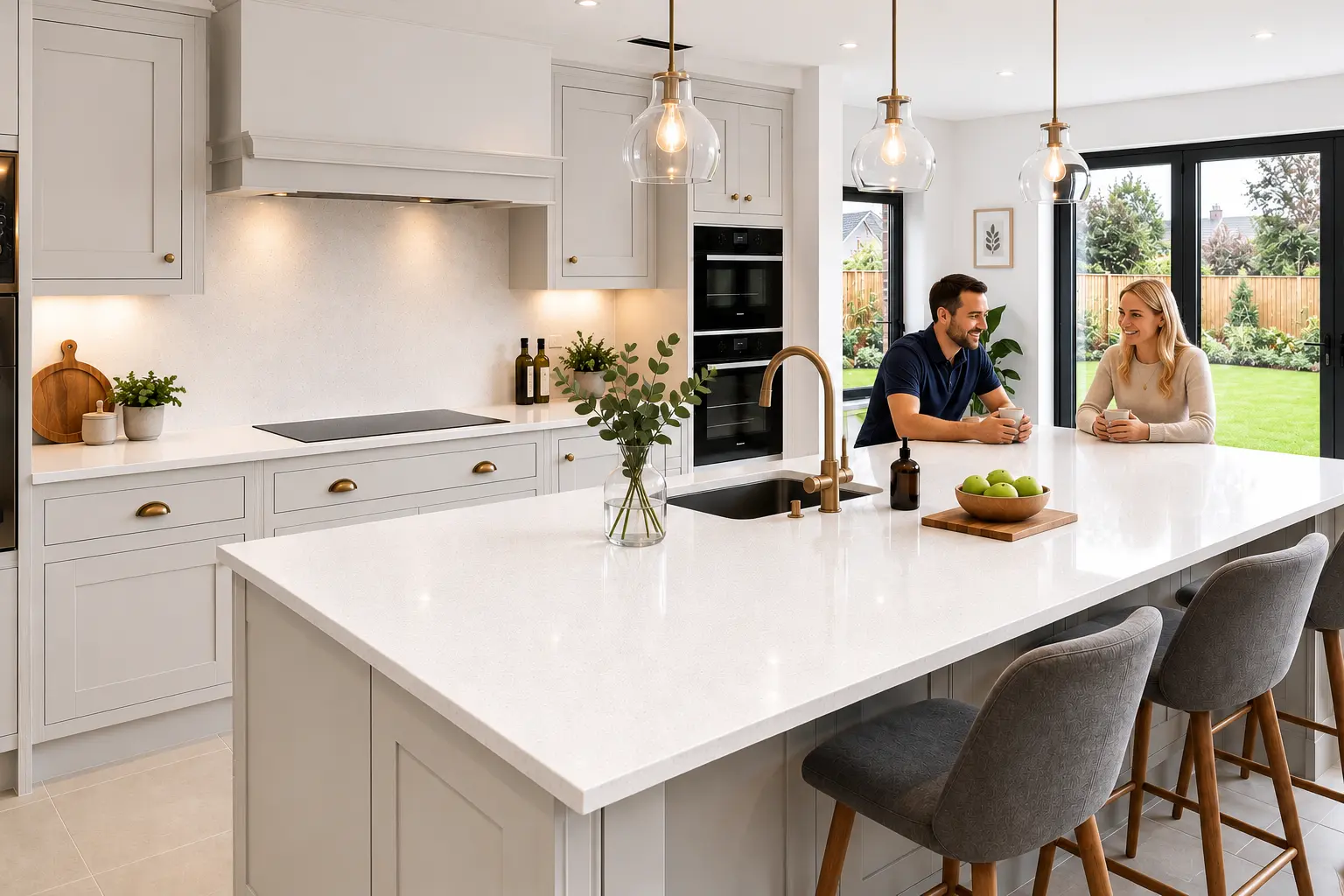
Absolutely. We can manufacture quartz worktops for large kitchen islands, breakfast bars, utility rooms, matching upstands and full-height splashbacks. Every design is produced to suit your chosen slab size, cabinet layout, appliance positions, available support and site access.
How long does templating and installation take?
The timescale depends on the availability of your chosen quartz, the complexity of the design and the confirmed template details. Once your kitchen is fully prepared and templated, we'll confirm your fabrication schedule and installation date.
Do you cut quartz on site in Sanderstead?
Wherever possible, all quartz is accurately templated and fabricated in our workshop before installation. This allows for a cleaner, more precise finish, with only minor adjustments carried out on site where necessary. Dry cutting engineered stone is not considered part of our normal installation process.
Are quartz worktops suitable for 1930s Sanderstead homes?
Yes. Quartz is an excellent choice for the detached and semi-detached 1930s homes found throughout the area, especially where kitchens have been remodelled or extended. Lighter or subtly veined designs help brighten deeper layouts, while the durability of quartz makes it ideal for busy family kitchens with islands and generous sink runs.
Can you help with quartz worktops for a rear extension?
Yes. We can prepare a quotation from your drawings before the kitchen is installed, then return to template once the base units, support panels, appliances and wall positions are complete. This approach works particularly well for the open-plan kitchen, dining and family spaces that are common in Sanderstead extension projects.
Can I request quartz samples before booking?
Yes. Viewing samples in your own home makes it much easier to compare colours and finishes with your cabinets, flooring and paint choices, as well as seeing how they look in natural light. Showroom visits are available by appointment, subject to the availability of your selected quartz range.
Can you make undermount sink cut-outs and drainer grooves?
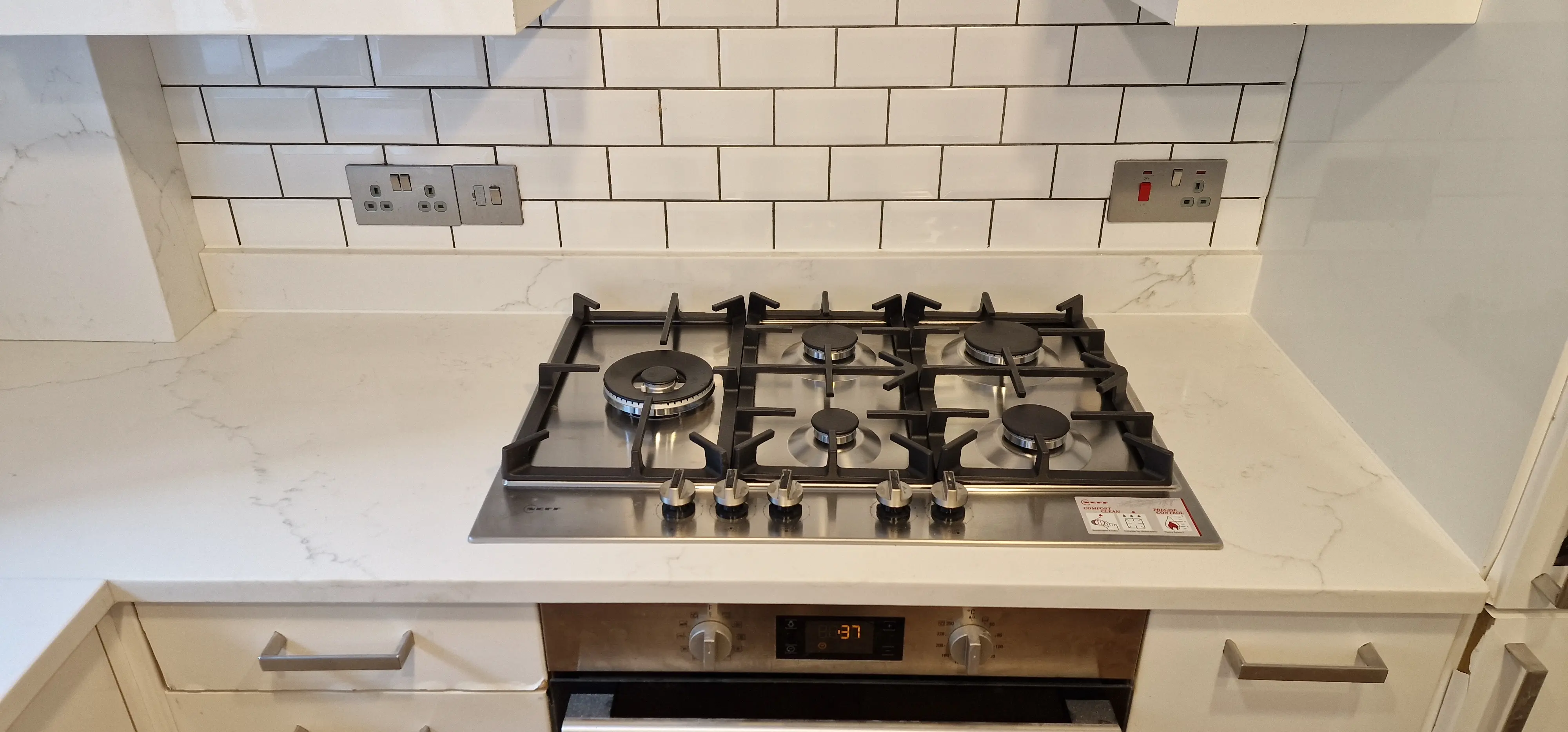
Yes. Once your sink and tap models have been confirmed, we can fabricate the worktop with a precision undermount sink cut-out, polished internal edges, accurately positioned tap holes and routed drainer grooves in the agreed direction.
What thickness is best for a Sanderstead quartz worktop?
Both 20mm and 30mm quartz are popular choices. A 20mm worktop offers a sleek, contemporary appearance, while a 30mm thickness creates a more substantial look. The right option depends on your cabinetry, island proportions, kitchen style and the quartz design you've selected.
Do quartz worktops need sealing?
Engineered quartz is non-porous and does not normally require routine sealing. Regular cleaning with suitable products is usually all that's needed, although it's still important to protect the surface from excessive heat, harsh chemicals and heavy impacts around exposed edges.